
Editorial


VoteNET.com: Award for Outstanding Political Web Site


Like the poor horses & ponies we seek to help, equine
welfare/rescue organizations must be nurtured too!


Desolute © 1998 IGHA/HorseAid
"Desolute" © 1998 IGHA/HorseAid, All Rights Reserved.

The REAL Costs of Rescue . . .

Without even going into the very extensive and necessary expenses (about $500 average per equine) that are required to run the HorseAid rescue/placement program world-wide (a rescue doesn't end when you remove the horse or pony from the abusive situation, that's when the rescue begins), consider this: IGHA/HorseAid had a $18,000+ postal mail/FedEx bill in 1999 (and we NEVER solicit funds in any of the "requests for Equine Abuse / PMU / Equine Care information" mail outs we respond to), and our world-wide answering service/phone/cell/pager expenses ran over $2,500 each and every month for that year (all directly related to abuse cases or equine placement).

That's $32,000 for that year without ever putting one hand on a horse (mail/telecom expenses are considered by us to be a part of our "operating", not "rescue" expenses -- operating expenses were paid for by the IGHA Board of Directors, rescue expenses were paid for by the HorseAid Founders).

We placed close to 550 horses and ponies during 1999 (rescues and owner donated animals), and were responsible for rescuing, or helping to rescue, at least 275 more (and we didn't charge a single dime for any of this). Cost is not what's it about with us, taking action is.

Its quite possible that during that year, we rescued/placed more equines than all the other U.S. equine rescue groups combined. But rescue is not a contest to see who gets the most, it's a contest to see who gets the least (and hopefully, eventually none -- because horses won't need rescuing). A rescue group that saved just one horse that year, worked just as hard rescuing that one horse as we did in rescuing over 825.

But those figures do show why HorseAid is still the largest equine rescue/welfare program in the world. We are also one of the most popular and highly regarded equine rescue/welfare Web sites (along with our premarin.org Web site) on the entire Internet — with almost 26 million visitors world-wide since 1996.

The HorseAid program was designed from the onset to be both privately funded and semi self-sufficient (supported in part by the International Generic Horse Association's equine registrations, and voluntary donations for adopted HorseAid horses). The problem is, HorseAid was taking up so much of our human and financial resources, we just didn't have any extra time or spare funds to promote our equine registrations -- and 99.9% of all adoptors give us a voluntary donation of ZERO (so much for the "people doing the right thing" philosophy we had so much faith in).

Many other legitimate horse rescue groups face the same problems we have, and we can't all continue to keep on giving, unless you decide to start giving too.

A horse rescue group that charges $1,000 for one of their rescues, isn't even going to break even on that horse, and let's face it, $1,000 for a good horse is a bargain in today's horse market. We can't (and don't) charge any fees, as that would add a possibly legal mitigating circumstance to our very restrictive adoption contracts. As an aside, HorseAid invented and developed the adoption contract system so widely used today by progressive equine rescues.

During 1998, we received over 2,500 desperate pleas for help involving equine abuse or other equine issues ("Take my horse, or I will have to sell him to a killer buyer", or "Can you help this abused horse?", etc.). Over 2,500 people who thought us worthy enough to ask for our immediate help, but ONLY five who thought us worthy enough to give us a voluntary gift of any kind (during all of 1998, we received a total of $440 from outside sources -- one $40, and one $100, which was used toward vet bills for HorseAid horses, one $150, earmarked for HorseAid Texas, and one $150 contribution earmarked for the Miami County Poniessm, sent by the same generous and caring young lady who drew for our exclusive use the above "Desolute" art print).

Our fifth benefactor was Stanley Equipment of Louisburg, KS, who was thankfully kind enough to donate the use of a much needed tractor to HorseAid for the Miami County Pony Rescuesm.

In 1999, we received just one donation in the entire year (the largest sum ever received that did not come from the IGHA Board of Directors or our HorseAid Founders), $1,000!

In January of 2000, we lost our in-house funding, but Staci Wilson, a founder of HorseAid, signed over all the proceeds of her best selling horse training book, "The Horse's Choice" to HorseAid, which is what HorseAid has been using to fund the entire HorseAid program with (the book went out of print in 2003, and with it, our final source of guaranteed funding). In 2001 we received no donations, and in 2002, a $50.00 donation. So far in 2003, we have received no donations.

If we add up all the donations we have received from outside sources (that is, donations not coming from either the board or a founder) from the year that HorseAid was founded (1984) to the present day (2003), it adds up to a whopping $1,690.00 (no, that's not a typo; one-thousand, six-hundred, ninety dollars), or $85 per year average.

There was never a year after 1986 that the hard cash costs of the HorseAid program didn't run at least $150,000, increasing to almost $400,000 by the early nineties. So it's easy to understand why we have had to scale back (and even cancel) some of our equine beneficence programs and services since losing our guaranteed in-house funding.

In contrast to our almost total lack of outside monetary donations, we have our selfless and hard working HorseAid volunteers: Becky Burns donated many hours of her time and even personal funds to help HorseAid save and then place the 231 horribly abused ponies rescued in Miami County, KS (supposedly the largest equine abuse case ever in U.S. history), as did Jean Smith (HorseAid Executive Committee, retired) and the HorseAid KS/MO field reps as well as the IGHA/HorseAid's legal and rescue support staffs. At least one HorseAid volunteer is always available 24/7 to respond to urgent emails and equine abuse reports or emergencies received on the HorseAid voice mail line.

HorseAid volunteers world-wide are just as devoted, hard working, and equally dedicated. Because of our budget shortfalls, we have had to decrease our volunteer base from the 450 to 500 we had in 1999, to the 27 we have today (every volunteer we support within the HorseAid program, even though uncompensated, still adds some small expense to the overall costs of the program — cell phones, digital cameras, pagers, liability insurance, etc.).

As Mr. Giobbé is often quoted as saying in interviews about the HorseAid program "HorseAid is not about just one individual, it is about the volunteers, without them, there could be no HorseAid. And because of them, we are able to extend every cash dollar we spend on the program into two or three equivalent dollars."

From the HorseAid volunteers point of view, Mr. Giobbé was HorseAid. He was the catalyst and the glue that bound the organization together, all the ideas about how the program should work were his. HorseAid is more than just a bunch of volunteers, it is a family, and losing our "dad" has been very difficult on all of us. Other rescue organizations have had to face the same dilemma and successfully survived and prospered -- as will we.

We often forget that somewhere in a rescue organization, there has to be one person who makes the tough decisions, one person who puts themselves "in harms way" when making those decisions, one person who has to pay the bills. In HorseAid, that one person was Enzo Giobbé.

We have also had to scale back (for the time being) the gathering and verification of all the timely and important information we continually published (both on the Web and in hard copy form) concerning the difficult challenges facing all equines world-wide.

In almost every case, that information is gathered first hand by us (if it's not, we credited the source), only to have some other organization re-word it (or take it "in toto" from our Web site) for use on their Web site and brochures sans credit to us (sometimes with that infamous "$$$ how you can help $$$" hotlink or mail-in form), making it seem as if they did the primary research.

When they steal our copyrighted content, they steal our very identity. After all, to a casual visitor, it may seem that our content was copied from someone else's Web site or brochure, not the other way around. They have no way of knowing (and probably don't care) where the information originated, as long as it proves useful to them. But they should care. They should care a lot.

What happens is, eventually the organization doing the gathering will get tired of publishing that information when they know people will use it as their own, and just quit expending the funds and volunteer resources to gather it.

Our Premarin site is just such a case. When we lost our carte blanc from our HorseAid founders, we decided to put all the remaining funds we had into the HorseAid HIP (Horses In Program). Horses have to eat, Web sites don't. We figured, let some other group take up the slack. Well, in the three years since we stopped going up to the pee provinces to do hands-on facts gathering, no other group has taken up that slack (except for some specialty cases), and all the PMU/Premarin information available today, is basically the same information we last published in late 1999 from our primary 1998 and 1999 hands on research and on-site visits.

Please don't steal our content. Our identity is the only real asset we own. If you want to use information contained on one of our Web sites (and all our content is original to us unless another credited source is listed), please ask!

If you already have our original content on your Web site, at the very least, give us credit for it. We cannot grant permission to use content that is credited to another source. While we always obtain permission to use non-originating source content, that permission is granted to us and has no distribution clause.

To their credit (and our undying gratitude), a lot of the Web sites that do re-publish our information, DO give us full credit for it -- as well as a linkback to the original source material. Thank you!

You don't have to go very far, or search very hard (just peruse this Web site thoroughly) to see what we have actually accomplished in the past, and will continue to accomplish in the future. What we publish on this Web site is just a miniscule sampling of the equine rescue and abuse cases we have been involved in (we have about 80 full sized metal filing cabinets filled to capacity with equine abuse and violence cases).

Yes, we are sometimes a loner organization (but not always by choice), and sometime we are very much "get in your face" when it comes to equine abuse cases and horse rescues that exist for the sole purpose of making their founders a good living (when they steal from you, they steal from the horses too!), and (it would seem) we are always on the edge. But that's only because being in "hands on" horse rescue is always going to put you on that edge. We haven't always made the right decision in rescuing a severely abused horse or pony, but it was always the right decision at the time.

Being a HorseAid volunteer has never been an easy job, but at least at the end of the day, we all know we have personally made a difference on behalf the horses. Please remember that each and every person at the IGHA and HorseAid, from board member to abuse case worker, is a 100% uncompensated volunteer. We do what we do to make a difference for the horses -- not to make ourselves a living. Many other equine rescue groups operate on this very same "rescue" model, and many do not.

Let's get one fact straight. Equine rescues don't owe you a damn thing. By choice, their allegiance is only to the horses and ponies they rescue. If in the course of operating that rescue, they have to pay themselves or their staff a salary (equine rescue can become a full time job very quickly) to put food on the table, so be it, as long as "putting food on the table" isn't the only thing the rescue actually accomplishes. Very few people would even want to do the job, even fewer would want to do it for free.

All of us, as equine rescue organizations, fail only when we have to turn horses away that desperately need our help. When dealing with any equine rescue person or group, please bear this in mind: If you won't help, we can't help, and sooner or later if you continue to not help, all you'll get for horses in need is this.

(All the current IGHA/HorseAid staff, plus some of the retired/past staff had some part in writing the above editorial)


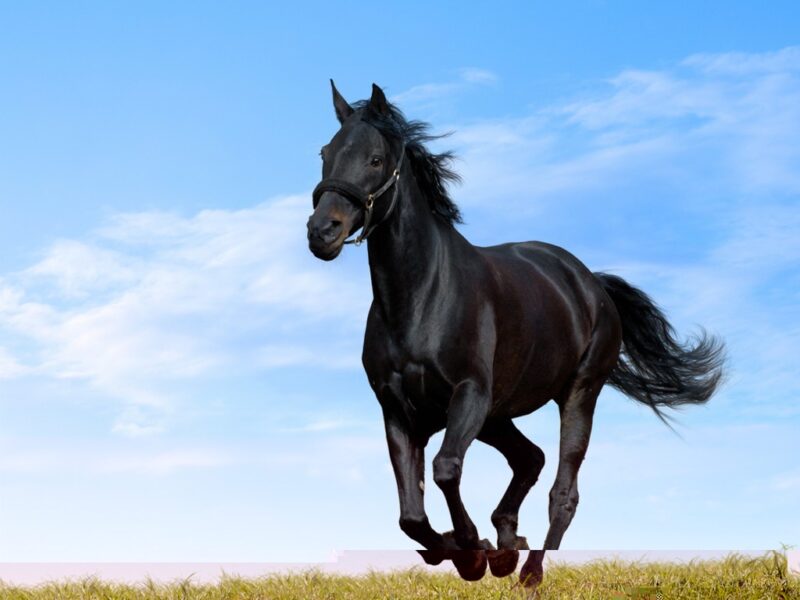
TB Running

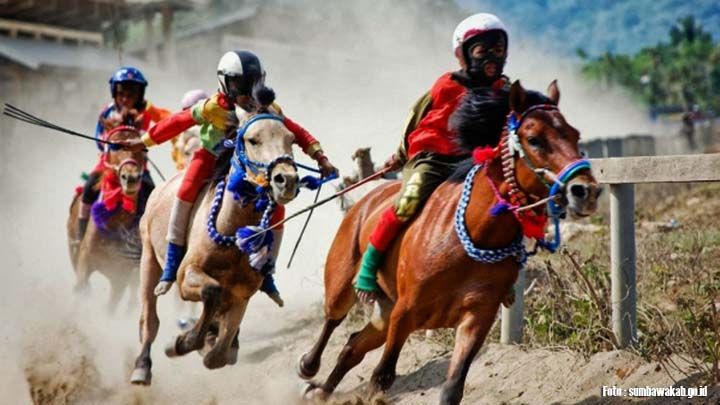
The Sport of Kings Indeed...

Last Call...


Every year, more than 60,000 thoroughbred racehorses are sold to the slaughter houses* to get ready for the newcomers. Of these 60,000, over 75% are easily retrainable, 95% are good enough for brood or stud (taking into consideration their bloodlines and/or temperament and conformation), and out of this, only an average of about 5% are too dangerous to keep around. The majority of these fine horses go to the meat market. There, they are then slaughtered and dispersed to foreign and national meat sellers. Most of these horses have their life ending at about the age of four; not even one-seventh their total life span.

These horse's lives depend on their speed. A thoroughbred who travels at a rate of twelve seconds a furlong (1/8th of a mile) is considered the best, the absolute fastest there has ever been, and there is only one Derby-winning horse that has beat this record at Churchill Downs (Secretariat, 1970). A horse who travels at a rate of thirteen seconds a furlong, a whole 8% slower, is virtually useless. For one moment, just imagine this: Your life depends on your agility, the rate at which your legs can take you. Not your thinking, your natural dancing (dressage), or jumping (hunter/jumper) skills, not anything except your speed and stamina, how well you can hold under weight. You do not decide your fate, choose your life, have anything to do with the decision to keep your life or put you to your death. You just try your hardest, and when you fail, you loose your life.

*Most go directly to Canada and Mexico.

(Source for the above two paragraphs: Kari Newman, her editorial used here with her permission.)

Of Whips and Servitude


[ IGHA Home Page | NEWS! ]


Since January 1st, 1996, you are unique guest